


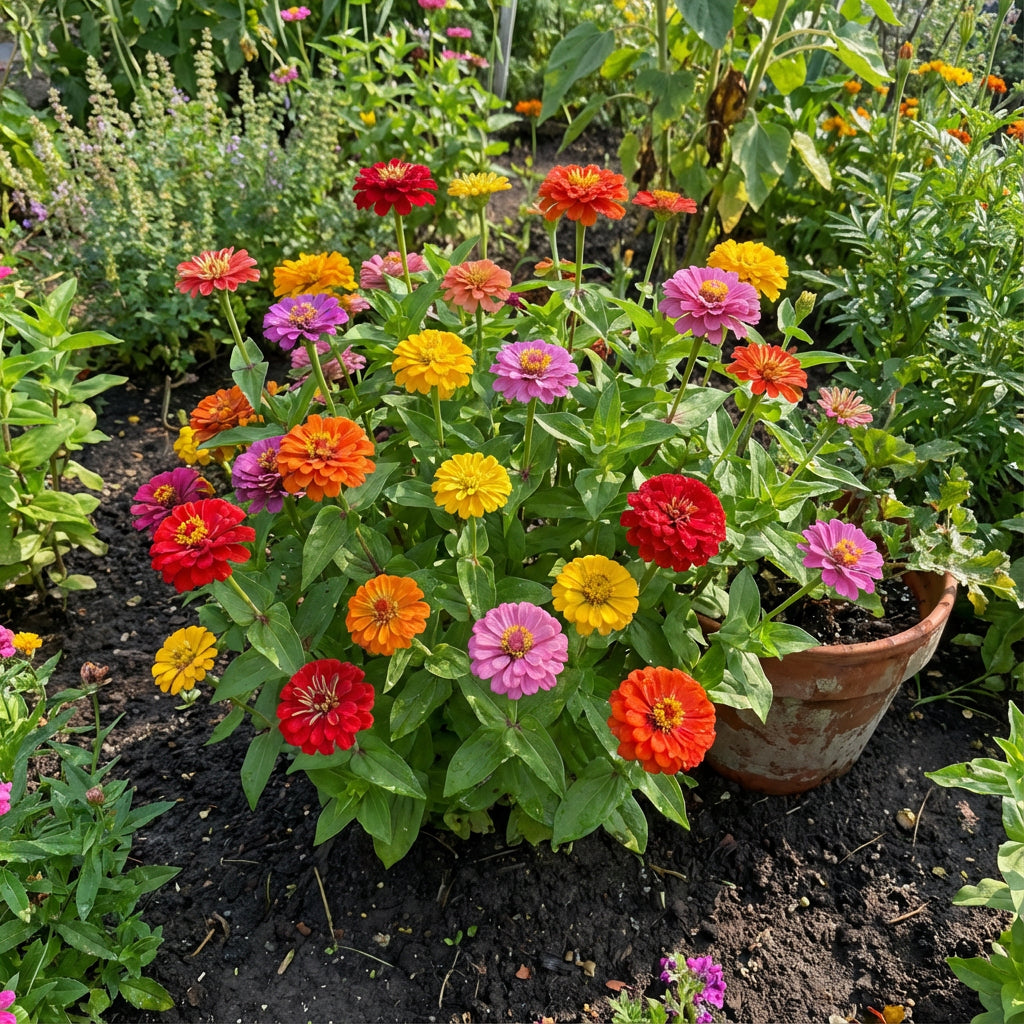
Zinnia Thumbelina Dwarf Mixed Colors Zinnia Elegans – Compact Flower Seeds
Brighten small garden spaces with Zinnia Thumbelina Dwarf Mixed Colors Zinnia Elegans. These compact flower seeds produce petite, vibrant blooms in a mix of colors, perfect for containers, borders, and cheerful cottage garden displays.
Key Benefits:
- Vibrant Mixed Blooms: Miniature flowers in multiple colors create a lively, eye-catching display.
- Compact Growth Habit: Ideal for small spaces, containers, edging, and low-maintenance garden beds.
- Long-Lasting Flowering: Continuous blooms throughout summer and early autumn provide extended color.
- Pollinator-Friendly: Attracts bees, butterflies, and other beneficial insects, enriching your garden ecosystem.
- Beginner-Friendly: Easy to sow and grow, providing vibrant results for novice gardeners.
Planting & Growth Information:
- Soil: Prefers well-draining, moderately fertile soil for healthy growth and abundant blooms.
- Sunlight: Thrives in full sun to produce compact, colorful flowers.
- Watering: Keep soil evenly moist during germination; established plants tolerate moderate watering.
- Germination: Typically 7–14 days under optimal conditions.
- Mature Size: Height 20–25 cm (8–10 inches) with a spread of 20–25 cm (8–10 inches).
- Growth Type: Annual, compact zinnia producing abundant small blooms.
- Bloom Season: Summer to early autumn, offering continuous color in small garden spaces.
Frequently Asked Questions:
- How can these seeds enhance my garden? They produce compact, vibrant blooms that add cheerful color to containers, borders, and small garden beds.
- Are Zinnia Thumbelina Dwarf seeds suitable for beginners? Yes, they are easy to sow, grow, and maintain, ideal for novice gardeners.
- Will these flowers attract pollinators? Yes, the miniature blooms attract bees, butterflies, and other beneficial insects.
- What is the ideal planting location? Plant in full sun with well-draining soil for compact growth and vivid flowers.
- How long until I see flowers? Expect the first blooms approximately 6–8 weeks after sowing, depending on growing conditions.