

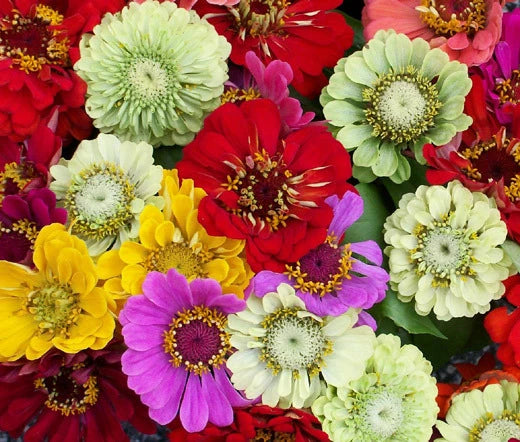
Zinnia Elegans – Mixed Color Garden Flower Seeds
Bring a burst of vibrant color to your garden with Zinnia Elegans seeds. Known for its cheerful, daisy-like blooms in a mix of red, pink, orange, yellow, and white shades, this annual flower adds charm, texture, and long-lasting color to borders, containers, and flower beds.
Key Benefits:
- Vibrant Mixed Blooms: Bright, multicolored flowers create a lively and eye-catching garden display.
- Long Blooming Season: Produces flowers from mid-summer to autumn, providing continuous color.
- Pollinator-Friendly: Attracts bees, butterflies, and other beneficial insects.
- Easy to Grow: Thrives in sunny locations with well-drained soil, ideal for beginner gardeners.
- Versatile Garden Use: Perfect for borders, flower beds, containers, and cut flower arrangements.
Planting & Growth Information:
- Soil: Prefers fertile, well-drained soil; tolerates average garden soil.
- Sunlight: Full sun for vibrant blooms and healthy growth.
- Watering: Moderate watering; allow soil to dry slightly between waterings.
- Germination Time: Typically 7–14 days under optimal conditions.
- Mature Height & Spread: Grows 45–90 cm tall with a spread of 30–45 cm, depending on variety.
- Growth Type: Annual flowering plant.
- Bloom Season: Mid-summer to autumn, producing long-lasting, multicolored flowers.
FAQ:
- How can these seeds enhance my garden?
- Zinnia Elegans produces bright, mixed-color blooms that add cheerful charm, texture, and long-lasting color to borders, containers, and flower beds.
- Are these plants suitable for beginner gardeners?
- Yes! With full sun, well-drained soil, and moderate watering, these easy-to-grow annuals thrive even for novice gardeners.
- When will I see flowers?
- Germination occurs in 1–2 weeks, with blooms appearing from mid-summer through autumn.
- Where is the best location to plant them?
- Full sun areas with fertile, well-drained soil; ideal for borders, flower beds, and containers.
- Will these flowers attract pollinators?
- Yes! Bees, butterflies, and other beneficial insects are naturally drawn to the bright, daisy-like blooms.