

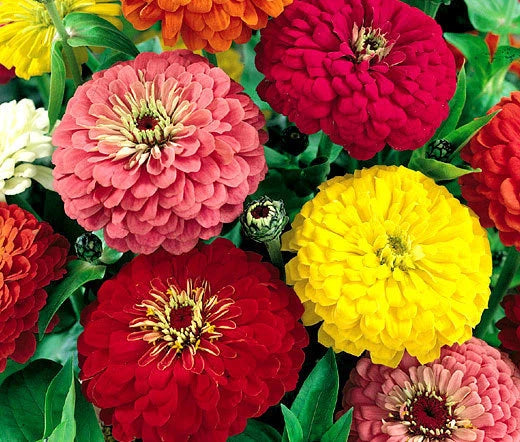
Zinnia Dahlia Mixed Colors Zinnia Elegans – Colorful Garden Flower Seeds
Bring a lively mix of color and texture to your garden with Zinnia Dahlia Mixed Colors Zinnia Elegans seeds. This annual produces large, dahlia-like blooms in a variety of bright shades, creating eye-catching displays for flower beds, borders, containers, and cut flower arrangements.
Key Benefits:
- Mixed Vibrant Colors: A delightful assortment of blooms in reds, pinks, oranges, yellows, and whites adds continuous visual interest.
- Dahlia-Like Blooms: Large, full flowers create dramatic focal points in gardens and floral displays.
- Pollinator-Friendly: Attracts bees, butterflies, and other beneficial insects to your garden.
- Easy to Grow: Hardy, resilient, and ideal for beginner gardeners seeking colorful garden flowers.
- Versatile Uses: Perfect for beds, borders, containers, and cutting for indoor arrangements.
Planting & Growth Information:
- Soil: Well-drained, fertile soil enriched with organic matter.
- Sunlight: Full sun for abundant, vibrant blooms.
- Watering: Water regularly, allowing soil to dry slightly between watering.
- Germination Time: 7–14 days under optimal conditions.
- Mature Height & Spread: Grows 45–60 cm tall with a spread of 30–45 cm.
- Growth Type: Annual flowering plant.
- Bloom Season: Summer through early autumn for long-lasting, mixed-color blooms.
FAQ:
- How will Zinnia Dahlia Mixed Colors enhance my garden?
- The variety of vibrant, dahlia-like blooms provides striking color, texture, and focal points for flower beds, borders, and containers.
- Is this plant suitable for beginners?
- Yes, it is easy to grow, hardy, and low-maintenance, ideal for novice gardeners seeking colorful garden flowers.
- When will I see flowers?
- Seeds germinate within 1–2 weeks, with blooms appearing in summer and continuing through early autumn.
- Where should I plant these seeds?
- Full sun areas with well-drained soil produce the brightest, most abundant blooms.
- Does it attract pollinators?
- Yes, bees, butterflies, and other beneficial insects are naturally attracted to the colorful blooms.