


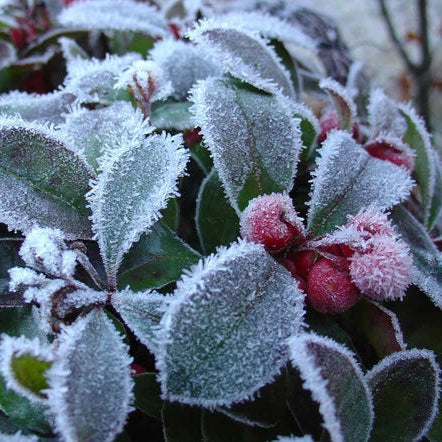
Wintergreen Creeping Gaultheria Procumbens – Hardy Groundcover Flower Seeds
Add year-round beauty and low-maintenance charm to your garden with Wintergreen Creeping Gaultheria Procumbens – Hardy Groundcover Flower Seeds. This evergreen groundcover features glossy green leaves, delicate white flowers in spring, and bright red berries that provide ornamental interest and wildlife appeal.
Key Benefits:
- Evergreen Foliage: Glossy green leaves maintain a fresh appearance throughout the year.
- Delicate Spring Blooms: Small white flowers add subtle charm and visual interest in spring.
- Bright Red Berries: Decorative berries in late summer and autumn attract birds and add seasonal color.
- Hardy Groundcover: Spreads low to the ground, ideal for slopes, borders, or woodland gardens.
- Wildlife Friendly: Supports pollinators and provides food for birds, enhancing your garden ecosystem.
Planting & Growth Information:
- Sunlight: Partial to full shade encourages healthy growth and berry production.
- Soil: Well-drained, acidic soil; tolerates loamy or sandy woodland conditions.
- Watering: Moderate; keep soil moist during germination and early growth.
- Growth Type: Low-growing, evergreen perennial groundcover with spreading stems.
- Height & Spread: Typically grows 4–6 inches tall and spreads 12–18 inches.
- Germination Time: 3–4 weeks; stratification may improve seed germination rates.
- Bloom & Berry Season: White flowers appear in spring; red berries develop late summer into autumn.
FAQ:
- How can these seeds enhance my garden? Wintergreen Creeping adds year-round evergreen foliage, spring flowers, and red berries for seasonal interest.
- Are they suitable for beginner gardeners? Yes, this hardy groundcover is low-maintenance and adapts well to shaded areas.
- Will it attract wildlife? Absolutely, the flowers support pollinators, and the berries attract birds.
- What is the ideal planting location? Partial to full shade with acidic, well-drained soil ensures optimal growth.
- How long until I see blooms or berries? Seeds germinate in 3–4 weeks; flowers appear in spring, with berries developing later in the season.