


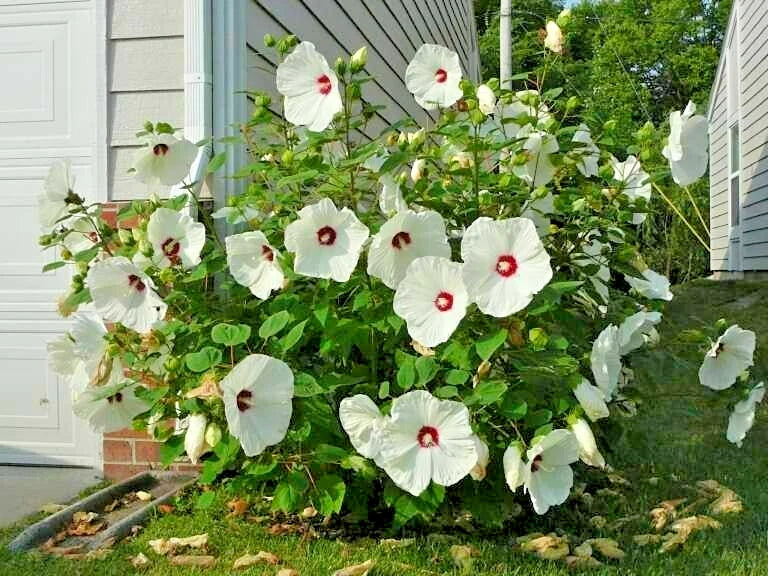
White Swamp Rose Mallow – Colorful Wild Hibiscus Flower Seeds
Bring serene beauty and vibrant charm to your garden with White Swamp Rose Mallow – Colorful Wild Hibiscus Flower Seeds. This perennial produces large, elegant white blooms with delicate, ruffled petals that brighten wetland areas, borders, or water-edge gardens. Its lush green foliage and upright growth habit create a striking contrast, enhancing the natural appeal of your outdoor space.
Key Benefits
- Large, ruffled white flowers add elegance and a soft, striking contrast to green foliage.
- Perennial growth ensures blooms return year after year with proper care.
- Upright habit creates structure and visual interest in borders, water-edge gardens, or naturalized plantings.
- Easy-to-grow seeds suitable for beginner gardeners seeking low-maintenance, ornamental flowers.
- Supports pollinators such as bees and butterflies, enhancing garden biodiversity.
Planting & Growth Information
- Soil: Prefers moist, well-drained soil; tolerates wetland or boggy conditions.
- Sunlight: Full sun to partial shade for optimal flowering and robust growth.
- Watering: Moderate to high; keep soil consistently moist, especially during flowering season.
- Growth Habit: Upright perennial with lush foliage and large, showy blooms.
- Height & Spread: Typically grows 3–5 feet tall with 2–4 feet spread.
- Germination: Seeds sprout in 10–20 days under warm, moist conditions.
- Bloom Season: Summer through early autumn, producing long-lasting, elegant white flowers.
Frequently Asked Questions
How can White Swamp Rose Mallow enhance my garden?
Its large, elegant white blooms add a graceful focal point and brighten borders, wetland areas, or naturalized gardens.
Are these seeds beginner-friendly?
Yes, they are easy to sow and maintain, making them ideal for novice gardeners.
Where should I plant them?
Plant in full sun to partial shade with moist, well-drained soil; perfect for wetland areas or water-edge gardens.
How long until I see blooms?
Expect elegant white flowers several weeks after germination, continuing through summer into early autumn.
Will they attract pollinators?
Yes, bees and butterflies are naturally attracted to the blooms, supporting a healthy garden ecosystem.