


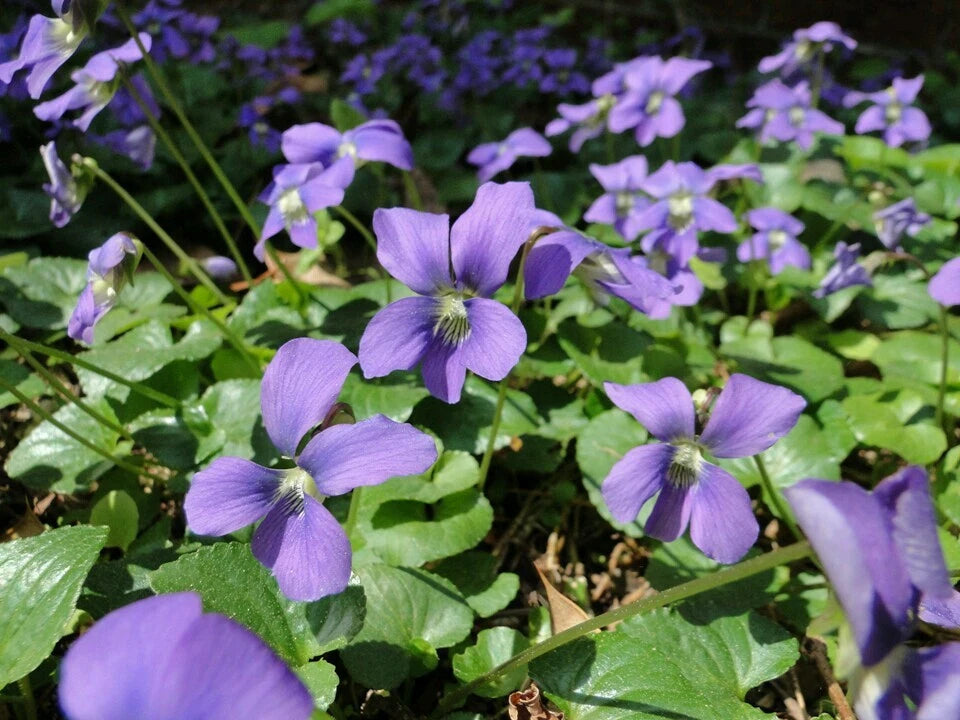
White Blue Violet Viola Sororia – Native Wildflower Seeds
Bring natural charm to your garden with White Blue Violet Viola Sororia – Native Wildflower Seeds. This delightful wildflower produces delicate blooms in shades of white, blue, and violet, creating a soft, enchanting palette that complements any outdoor space.
Key Benefits:
- Delicate multicolor blooms: Soft white, blue, and violet flowers add subtle beauty to garden beds and naturalized areas.
- Native wildflower: Well-adapted to local climates, supporting biodiversity and ecosystem health.
- Pollinator-friendly: Attracts bees, butterflies, and other beneficial insects, enhancing your garden’s vitality.
- Low-maintenance growth: Hardy and resilient, suitable for beginner gardeners and natural landscapes.
- Versatile planting: Ideal for borders, meadows, rock gardens, or container planting.
Planting & Growth Information:
- Soil: Well-draining, moderately fertile soil; tolerates clay, loam, or sandy soils.
- Sunlight: Full sun to partial shade for optimal flowering.
- Watering: Keep soil evenly moist during germination; established plants are drought-tolerant.
- Germination: 10–21 days; light stratification can improve sprouting.
- Growth Type: Perennial wildflower with low, spreading foliage.
- Mature Height & Spread: Typically 6–12 inches tall with a 6–12 inches spread.
- Bloom Season: Spring to early summer, with soft, colorful flowers recurring each year.
Frequently Asked Questions:
- How can these seeds enhance my garden? Their delicate, multicolored blooms create natural charm and add soft color to borders or wildflower meadows.
- Are they suitable for beginner gardeners? Yes! Viola Sororia is hardy, resilient, and easy to grow with basic care.
- Will they attract pollinators? Absolutely. Bees, butterflies, and other beneficial insects are naturally drawn to the flowers.
- Where should I plant them? Choose a sunny or partially shaded area with well-draining soil; they also thrive in naturalized garden settings.
- How long until I see blooms? Expect flowers in spring or early summer, with perennial blooms returning each year.