


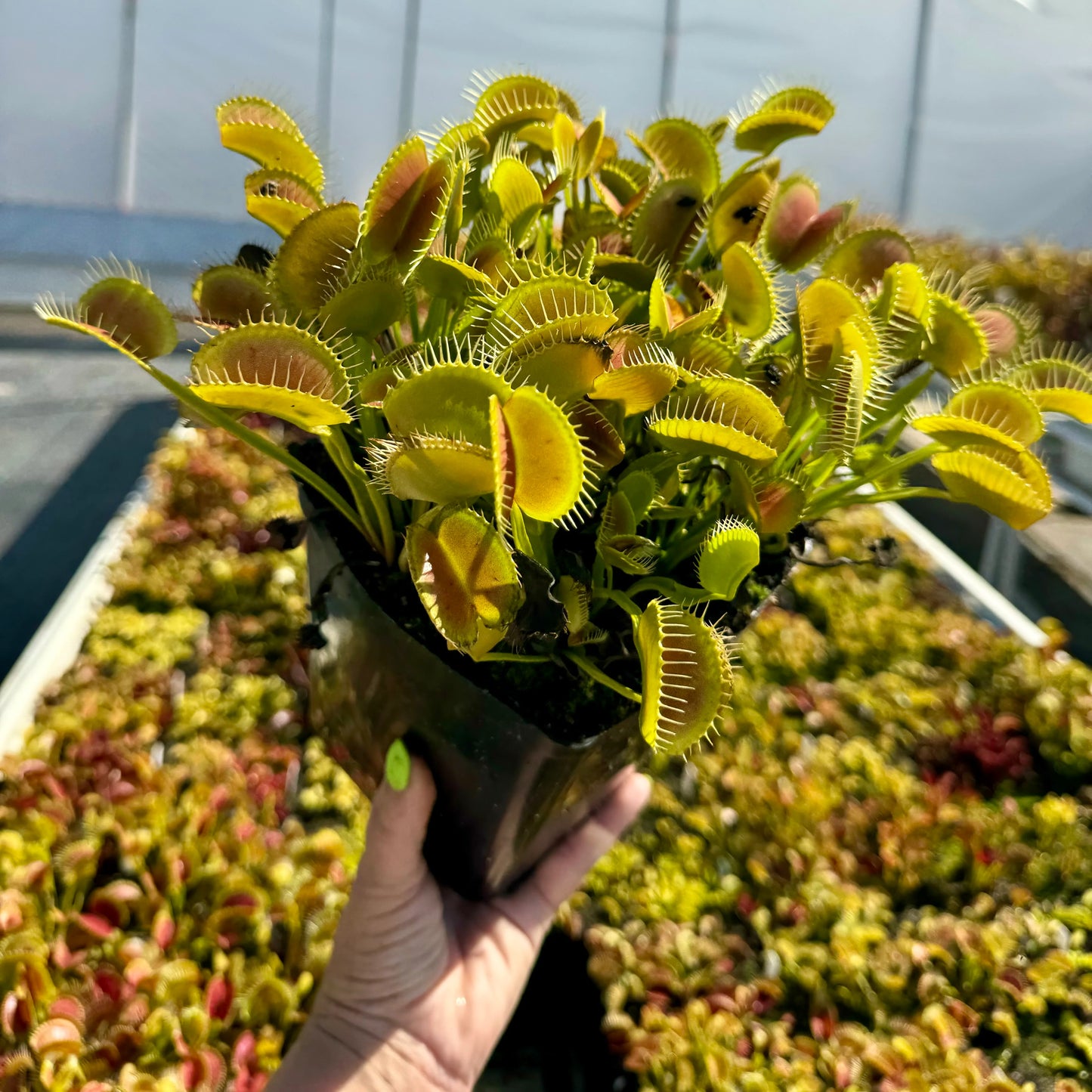
Venus Flytrap ‘King Henry’ is one of the largest and most vigorous forms of Dionaea muscipula, known for its wide traps and strong growth habit. Grown from Heirloom, Non-GMO seeds, this variety is suitable for hobby growers, collectors, and carnivorous plant enthusiasts. ‘King Henry’ develops broad green leaves with prominent traps that respond to touch under the right conditions. It thrives in nutrient-poor, acidic soil and requires clean water along with full sunlight.
This variety is ideal for indoor carnivorous plant collections, outdoor bog gardens, and controlled terrarium environments. With proper care, it produces large upright growth and distinctive traps throughout the growing season.
Key Features
-
Heirloom and Non-GMO seed variety
-
Large-trap form of Dionaea muscipula
-
Suitable for indoor and outdoor carnivorous plant setups
-
Requires low-nutrient, acidic growing medium
-
Responds naturally to environmental conditions
-
Thrives in full sunlight with consistent moisture
-
Ideal for collectors and carnivorous plant growers
Specifications
-
Botanical Name: Dionaea muscipula ‘King Henry’
-
Seed Type: Heirloom, Non-GMO
-
Plant Type: Carnivorous perennial
-
Trap Size: Larger than standard Venus Flytrap types
-
Growth Habit: Upright, vigorous
-
Sun Exposure: Full sun or strong artificial light
-
Soil Type: Peat moss and perlite (nutrient-free)
-
Water Requirement: Distilled or rainwater only
-
Hardiness Zones: 7–10 (can be overwintered indoors)
Planting Guide
-
Prepare the Soil
Use a 1:1 mix of peat moss and perlite. Do not use fertilizer or enriched soil. -
Sow the Seeds
-
Spread seeds on the soil surface.
-
Do not bury; they need light to germinate.
-
-
Moisture & Watering
-
Keep soil evenly moist using rainwater or distilled water.
-
Avoid tap water.
-
-
Light Requirements
-
Provide full sun or strong grow lights for 12–14 hours daily.
-
-
Humidity & Temperature
-
Maintain moderate to high humidity for germination.
-
Ideal temperature: 20–28°C.
-
-
Germination Time
-
Typically 4–8 weeks depending on conditions.
-
-
Long-Term Care
-
Provide a winter dormancy period of 2–3 months for mature plants.
-
Keep soil moist but not waterlogged.
-