


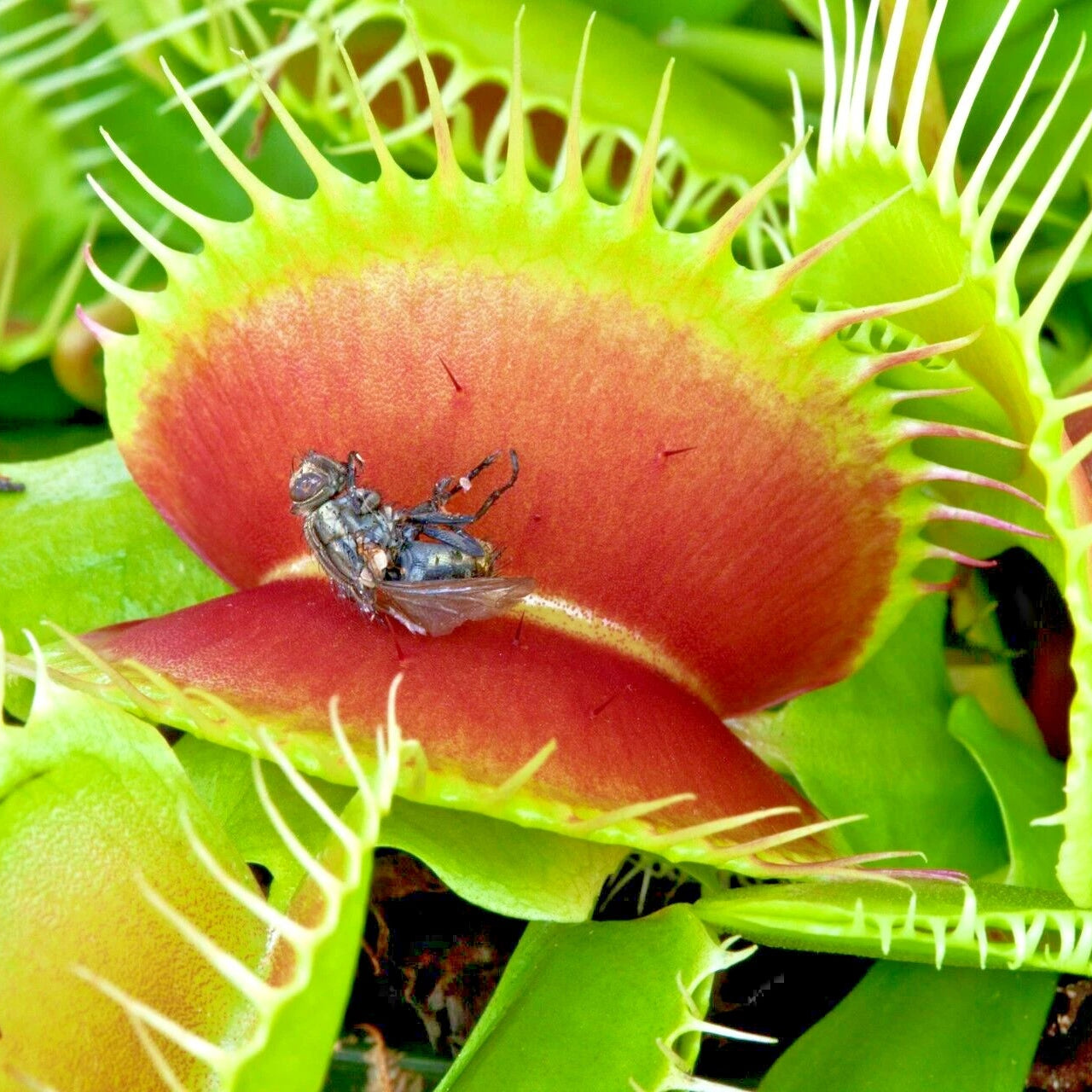
Venus Flytrap Dionaea Muscipula – Carnivorous Plant Seeds
Bring a touch of fascinating intrigue to your garden or indoor collection with Venus Flytrap Dionaea Muscipula – Carnivorous Plant Seeds. This unique carnivorous plant produces specialized trap leaves that capture small insects, combining exotic appeal with educational interest for gardeners of all ages.
Key Benefits:
- Intriguing carnivorous behavior: Trap leaves snap shut to capture small insects, offering a captivating and interactive gardening experience.
- Compact growth: Small, rosette-forming plants suitable for terrariums, containers, or outdoor bog gardens.
- Unique educational value: Perfect for teaching children and enthusiasts about plant adaptations and insect interactions.
- Perennial growth: Returns year after year with proper care, adding ongoing interest to your plant collection.
- Pollinator-neutral flowers: Produces delicate blooms separate from the traps, ensuring insect prey is available.
Planting & Growth Information:
- Soil: Acidic, nutrient-poor, well-draining mix (e.g., sphagnum peat moss and sand) to mimic natural habitat.
- Sunlight: Full sun to partial sun; bright light encourages healthy trap development.
- Watering: Keep soil consistently moist with distilled or rainwater; avoid tap water with minerals.
- Germination: 2–6 weeks; maintain warm temperatures and high humidity for best sprouting.
- Growth Type: Perennial carnivorous plant.
- Mature Height & Spread: Typically 4–6 inches tall, forming a small rosette of trap leaves.
- Bloom Season: Spring to summer; produces small, delicate flowers on long stalks separate from the traps.
Frequently Asked Questions:
- How can these seeds enhance my garden or collection? Venus Flytrap adds exotic intrigue, interactive trap leaves, and a unique visual focal point to any plant collection or container garden.
- Are they suitable for beginner gardeners? Yes! With proper soil, moisture, and sunlight, these fascinating plants are manageable and rewarding.
- Will they capture insects? Yes, the trap leaves naturally close on small insects, demonstrating carnivorous behavior.
- Where should I plant them? Containers, terrariums, or outdoor bog gardens with acidic, well-draining soil and consistent moisture are ideal.
- How long until I see trap development? Small traps usually form within weeks of germination, with full rosettes developing over several months.