


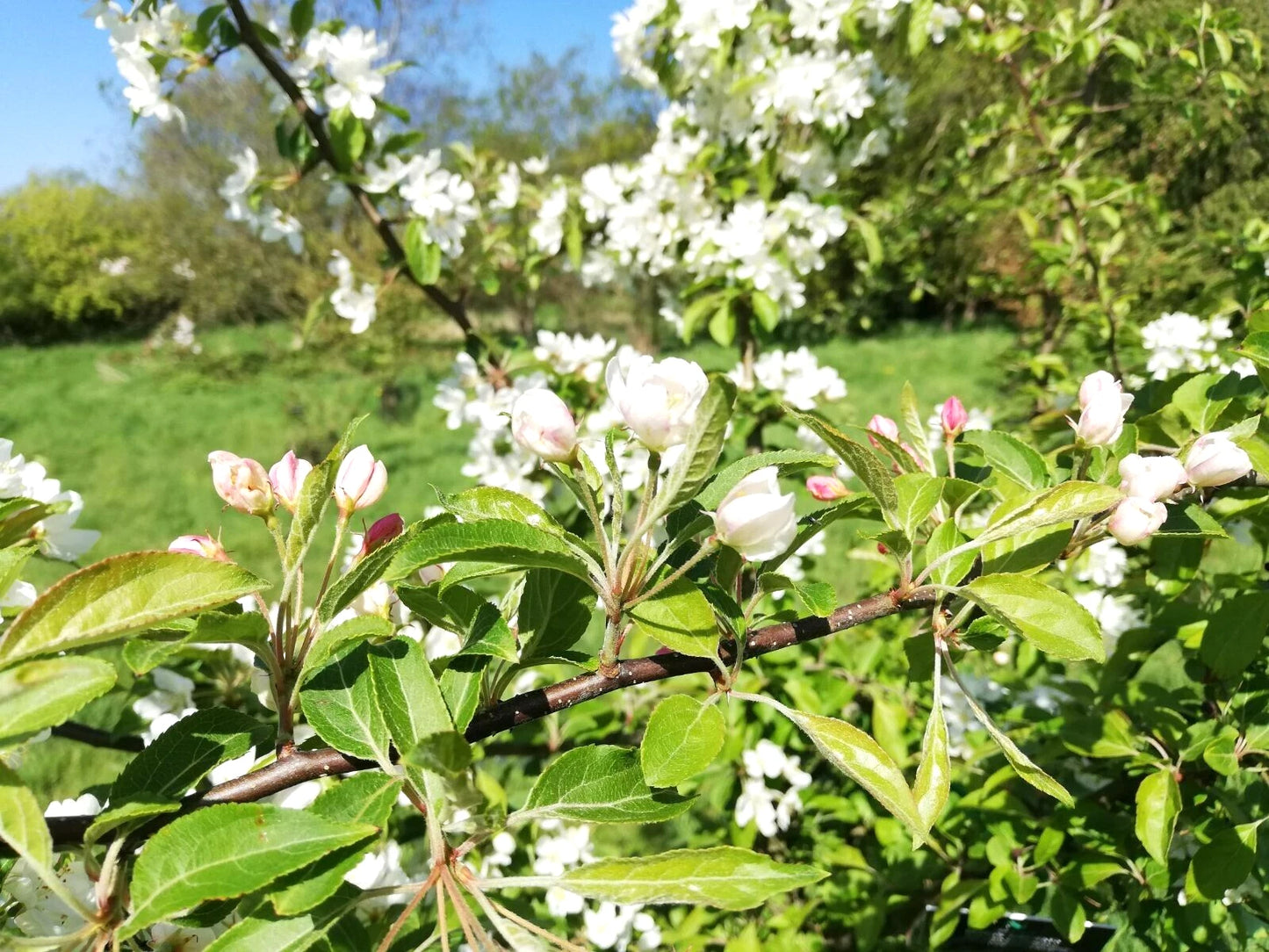
Siberian Crab Apple Malus Baccata – Hardy Fruit Tree Seeds
Add resilient fruit-bearing beauty to your garden with Siberian Crab Apple Malus Baccata – Hardy Fruit Tree Seeds. This hardy tree produces small, bright red crab apples and offers ornamental value with spring blossoms and lush foliage, making it a versatile choice for home orchards, hedges, or landscape plantings.
Key Benefits:
- Edible Crab Apples: Produces small, flavorful fruits suitable for preserves, jellies, and culinary use.
- Hardy Fruit Tree: Tolerates cold climates and thrives in a variety of soils, ideal for northern regions.
- Ornamental Appeal: Spring blossoms and vibrant red fruits enhance visual interest throughout the year.
- Versatile Landscaping: Suitable for orchards, garden borders, or as an ornamental hedge.
- Supports Wildlife: Fruits attract birds and beneficial insects, encouraging a healthy ecosystem.
Planting & Growth Information:
- Sunlight: Full sun ensures optimal flowering and fruit development.
- Soil: Well-drained, fertile soil; tolerates sandy or loamy conditions.
- Watering: Moderate; maintain consistent moisture during establishment, then reduce once mature.
- Growth Type: Hardy deciduous fruit tree with spring blossoms and small red fruits.
- Height & Spread: Typically grows 15–25 feet tall with a similar spread over time.
- Germination Time: 3–6 weeks; cold stratification may improve germination rates.
- Bloom Season: Spring, followed by small red fruits in late summer to autumn.
FAQ:
- How can these seeds enhance my garden? Siberian Crab Apple adds edible fruits, spring blossoms, and year-round ornamental appeal.
- Are they suitable for beginner gardeners? Yes, this hardy tree is resilient and manageable with proper planting and care.
- Can it tolerate cold climates? Absolutely, it thrives in northern and colder regions.
- What is the ideal planting location? Full sun with well-drained soil promotes flowering and fruiting.
- How long until I see fruits? Seeds germinate in 3–6 weeks; small fruits appear after a few years as the tree matures.