


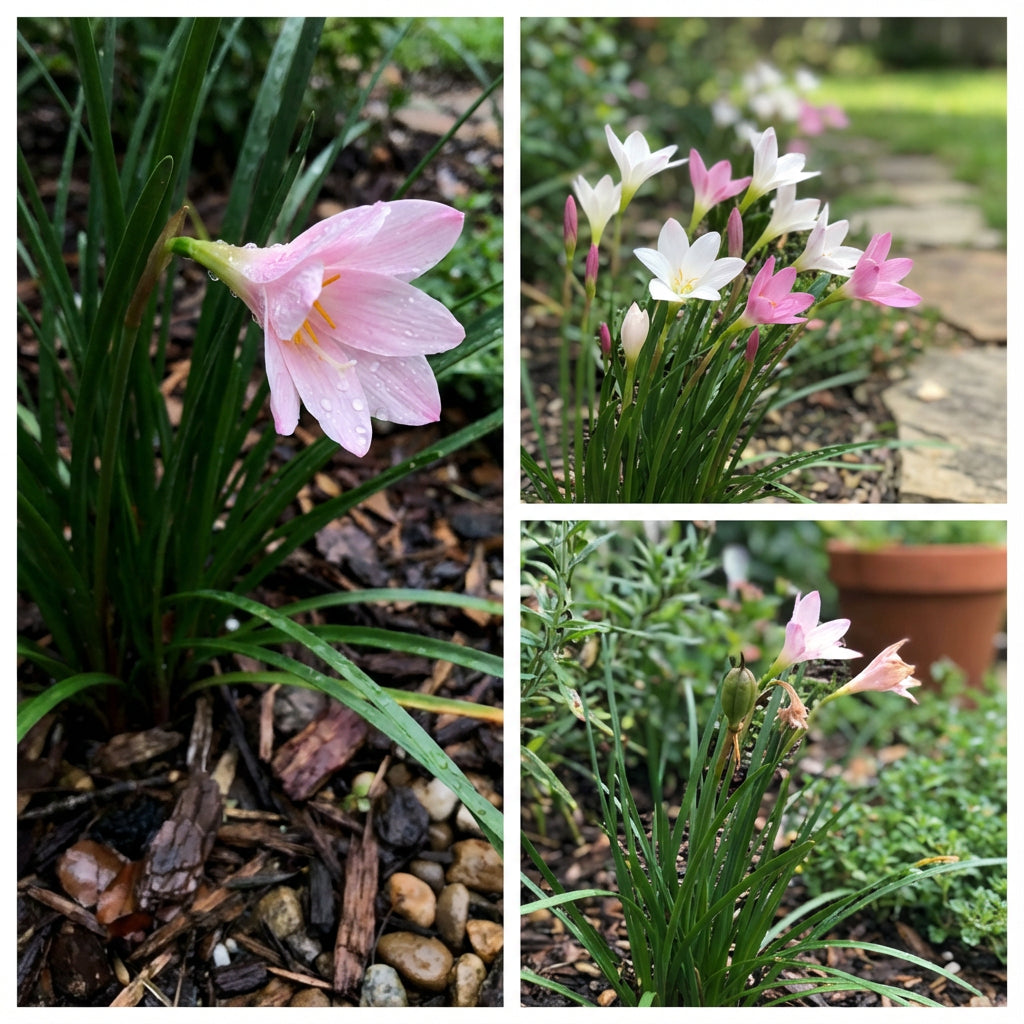
Rain Lily Zephyranthes Smallii – Hardy Flower Bulbs
Bring delicate charm to your garden with Rain Lily Zephyranthes Smallii – Hardy Flower Bulbs. Known for their dainty, star-shaped blooms that appear after rainfall, these hardy bulbs add sudden bursts of color to borders, rockeries, or container gardens.
Key Benefits:
- Delicate Star-Shaped Flowers: Produces charming white to pale pink blooms that emerge suddenly, brightening garden spaces.
- Hardy and Resilient: Tolerates a range of soil types and climates, thriving in both garden beds and containers.
- Low-Maintenance: Requires minimal care once established, making it ideal for beginners.
- Seasonal Surprise: Blooms often appear after rainfall, adding a playful and unexpected element to your garden.
- Pollinator Friendly: Flowers attract bees and other beneficial insects, supporting a healthy garden ecosystem.
Planting & Growth Information:
- Sunlight: Full sun to partial shade for optimal growth and flowering.
- Soil: Well-drained, fertile soil; tolerates sandy or loamy soils.
- Watering: Moderate; allow soil to dry slightly between waterings, with extra moisture during bloom periods.
- Growth Type: Hardy perennial bulb that produces upright, grass-like foliage with delicate flowers.
- Height & Spread: Typically grows 6–12 inches tall with a modest spread, suitable for edging or container planting.
- Bloom Season: Late summer to fall, often triggered by rainfall.
- Planting Depth: Plant bulbs 1–2 inches deep with spacing of 2–4 inches for best results.
FAQ:
- How can these bulbs enhance my garden? Their sudden, dainty blooms add bursts of color and charm to borders, containers, or rockeries.
- Are they suitable for beginner gardeners? Yes, Rain Lily bulbs are hardy, low-maintenance, and forgiving, perfect for novices.
- Will they attract pollinators? Absolutely, the flowers attract bees and beneficial insects, enhancing garden biodiversity.
- What is the ideal planting location? Full sun to partial shade with well-drained soil ensures healthy growth and abundant blooms.
- How long until I see flowers? Bulbs typically produce blooms in their first growing season after planting, often triggered by rainfall events.