


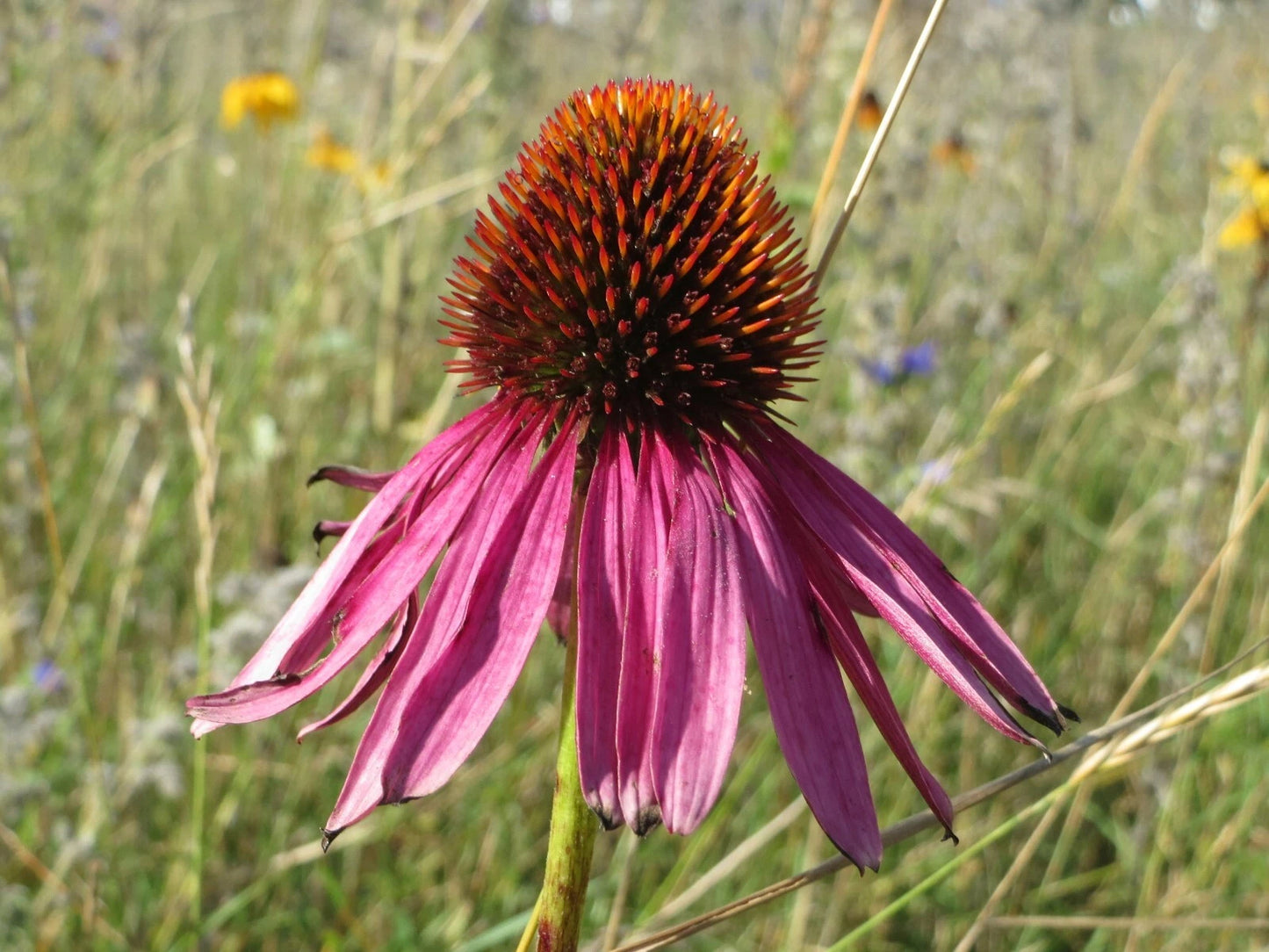
Purple Coneflower Echinacea Purpurea – Perennial Flower Seeds
Add vibrant color and classic charm to your garden with Purple Coneflower Echinacea Purpurea – Perennial Flower Seeds. This hardy perennial features large, purple daisy-like blooms with prominent central cones, creating a striking display in flower beds, borders, or container gardens. Its upright, clump-forming habit provides structure and seasonal interest while supporting pollinators.
Key Benefits
- Produces large, purple daisy-like flowers with prominent central cones for visual appeal.
- Perennial growth ensures blooms return year after year with proper care.
- Upright, clump-forming structure adds depth and dimension to flower beds and borders.
- Attracts bees, butterflies, and other pollinators, supporting a thriving garden ecosystem.
- Easy-to-grow seeds suitable for beginner gardeners seeking low-maintenance perennial flowers.
Planting & Growth Information
- Soil: Prefers well-drained, fertile soil; tolerates average garden soil.
- Sunlight: Full sun for best flowering performance and robust growth.
- Watering: Moderate; keep soil evenly moist during germination and early growth, then reduce once established.
- Growth Habit: Upright, clump-forming perennial with sturdy stems and long-lasting blooms.
- Height & Spread: Grows 18–24 inches tall with a 12–18 inch spread.
- Germination: Seeds sprout in 10–20 days under warm, moist conditions.
- Bloom Season: Summer to early autumn, offering vibrant and durable flowers.
Frequently Asked Questions
How can Purple Coneflower enhance my garden?
Its rich purple blooms provide a bold focal point and natural beauty in flower beds, borders, or containers.
Are these seeds beginner-friendly?
Yes, they are easy to sow and maintain, perfect for gardeners of all skill levels.
Where should I plant them?
Choose full sun with well-drained soil; ideal for flower beds, borders, or container gardens.
How long until I see blooms?
Expect striking purple flowers during summer, continuing through early autumn.
Will they attract pollinators?
Yes, bees and butterflies are naturally attracted to the vibrant flowers, encouraging a healthy garden ecosystem.