


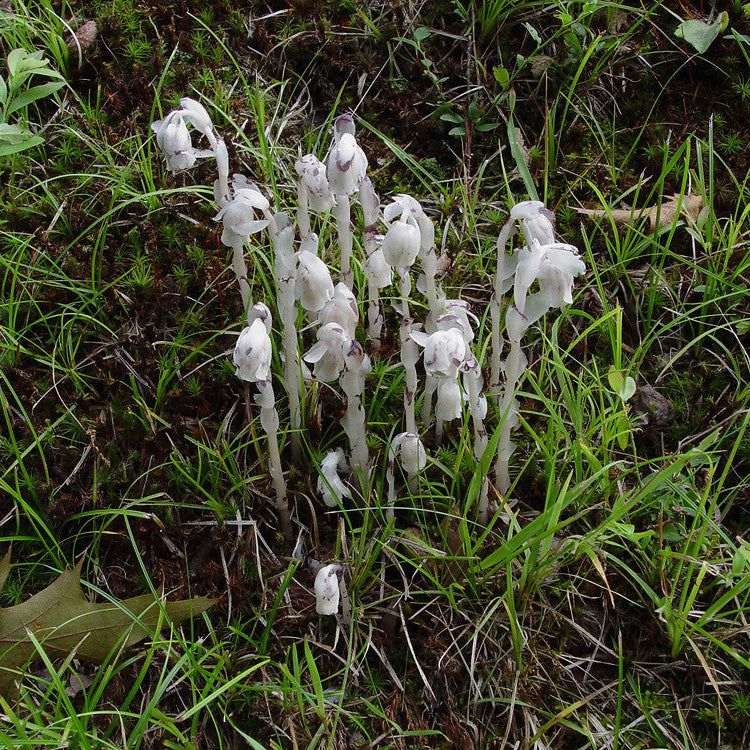
Monotropa uniflora, commonly known as the Ghost Plant or Indian Pipe, is a rare, ethereal woodland species recognized for its white, translucent stems and nodding flower heads. Unlike typical green plants, it lacks chlorophyll and derives nutrients through a symbiotic relationship with forest fungi. Found in shaded, moist forest floors, this mysterious plant adds a magical, ghostly charm to any natural garden or plant collection. Perfect for botanical enthusiasts and rare plant lovers.
🌱 Germination & Growing Information:
-
Soil: Moist, rich in decaying leaf litter and humus
-
Temperature: Prefers cool, shaded woodland conditions (10°C–20°C / 50°F–68°F)
-
Planting Depth: Scatter seeds on surface; do not cover, as they need light fungal contact to germinate
-
Germination Time: Highly variable (weeks to months); requires mycorrhizal fungi to sprout
-
Watering: Keep soil consistently moist, never soggy
-
Sunlight: Full shade; avoid direct sun exposure
-
Fertilizer: None required; grows best in undisturbed organic soil
-
Blooming Season: Summer (typically June–August)
-
Height: Around 10–25 cm (4–10 inches) tall
-
Special Note: Naturally rare and difficult to cultivate without specific forest fungi—ideal for educational or research purposes