


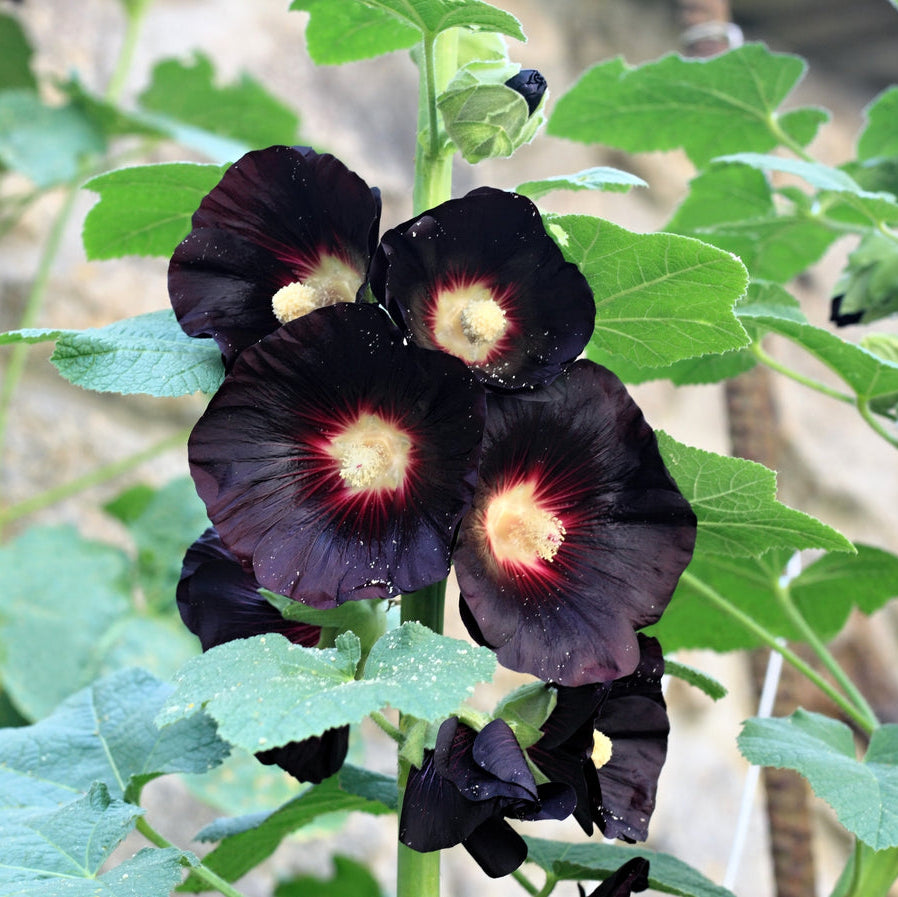
Hollyhock Nigra Black Watchman Alcea Rosea – Tall Garden Flower Seeds
Introduce dramatic, towering blooms to your garden with Hollyhock Nigra Black Watchman Alcea Rosea seeds. This tall, striking variety produces deep, almost black flowers that rise above other plants, making a bold statement along fences, borders, and cottage gardens.
Key Benefits:
- Dark, Dramatic Blooms: Rich, deep-colored flowers create a striking focal point in garden landscapes.
- Tall, Upright Growth: Stately stems reaching impressive heights add vertical interest and structure.
- Pollinator-Friendly: Flowers attract bees, butterflies, and other beneficial insects.
- Classic Cottage Garden Appeal: Ideal for traditional and formal garden designs, creating height and visual drama.
- Easy-to-Grow: Suitable for novice gardeners seeking tall, show-stopping flowers.
Planting & Growth Information:
- Soil: Well-drained, fertile soil supports strong upright growth and abundant flowering.
- Sunlight: Full sun promotes vigorous stems and dense flower production.
- Watering: Regular watering ensures healthy development; avoid waterlogged soil.
- Germination Time: 10–21 days under optimal conditions.
- Mature Height & Spread: Can grow 1.8–2.5 meters tall with a spread of 45–60 cm.
- Growth Type: Hardy biennial or short-lived perennial with upright habit.
- Bloom Season: Summer, providing dramatic dark blooms for striking garden impact.
FAQ:
- How will Hollyhock Nigra Black Watchman enhance my garden?
- The tall, deep-colored flowers provide bold vertical accents and rich contrast in borders, fences, and cottage gardens.
- Is this plant suitable for beginners?
- Yes, it is easy-to-grow and hardy, making it ideal for novice gardeners seeking tall, eye-catching blooms.
- When can I expect flowers?
- Blooming occurs in summer, with dark, dramatic flowers rising above other plants for maximum visual impact.
- Where should I plant these seeds?
- Full sun with well-drained, fertile soil promotes strong growth and prolific flowering.
- Does it attract pollinators?
- Yes, the blooms attract bees, butterflies, and other beneficial insects, supporting a healthy garden ecosystem.