


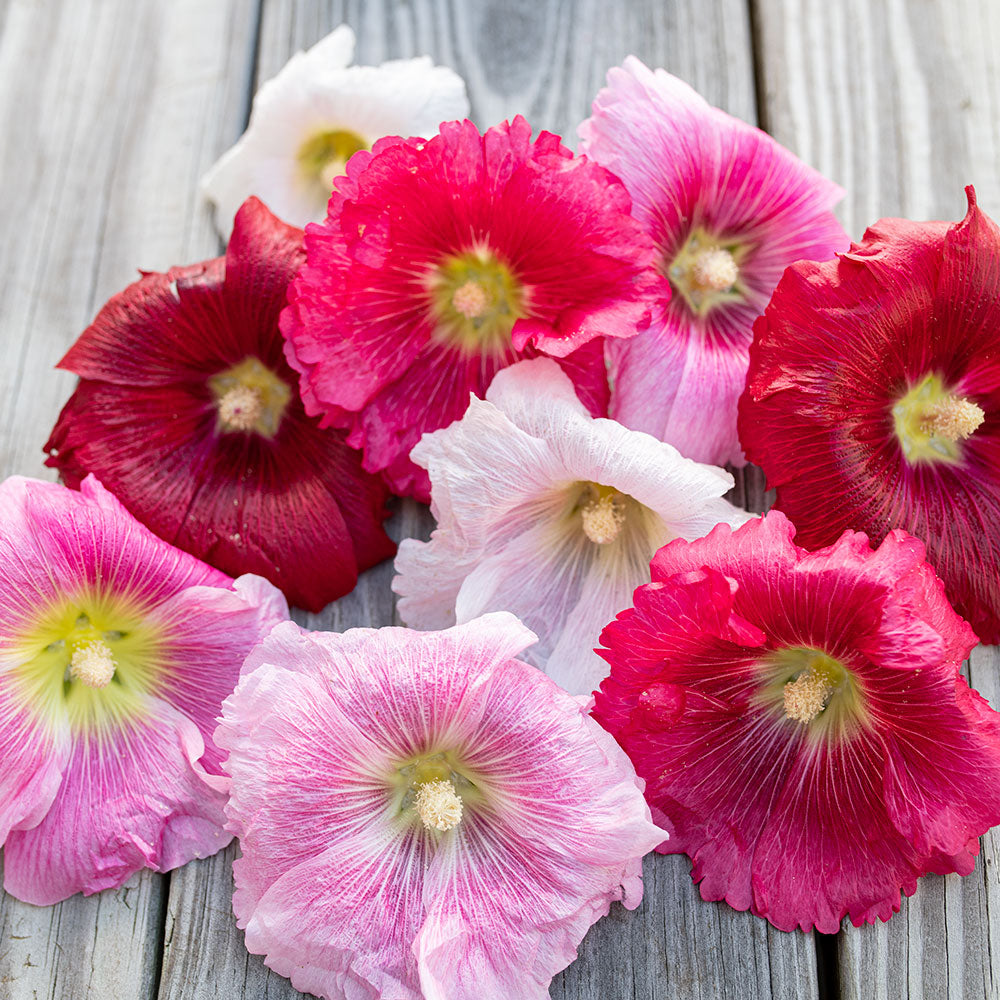
Hollyhock Indian Spring Mixed Colors Alcea Rosea – Colorful Garden Flower Seeds
Elevate your garden with the towering elegance of Hollyhock Indian Spring Mixed Colors Alcea Rosea seeds. This biennial produces long spikes of multi-colored blooms, adding vertical interest and classic charm to flower beds, borders, and cottage-style gardens.
Key Benefits:
- Multi-Colored Blooms: A lively mix of pinks, purples, reds, and whites creates a captivating, cheerful display.
- Tall, Upright Growth: Dramatic flower spikes provide height and structure, ideal for back borders and cottage gardens.
- Long Blooming Season: Flowers appear from midsummer through early autumn, offering extended garden interest.
- Pollinator-Friendly: Attracts bees and butterflies, supporting a vibrant and healthy garden ecosystem.
- Easy-to-Grow: Suitable for beginner gardeners seeking bold, colorful flowers with classic appeal.
Planting & Growth Information:
- Soil: Well-drained, fertile soil encourages strong stems and abundant flowering.
- Sunlight: Full sun to partial shade promotes upright growth and vibrant blooms.
- Watering: Moderate watering; keep soil evenly moist without waterlogging.
- Germination Time: 10–21 days under optimal conditions.
- Mature Height & Spread: 150–200 cm tall with a spread of 40–50 cm, forming upright, stately flower spikes.
- Growth Type: Biennial with upright habit; may self-seed in suitable conditions.
- Bloom Season: Mid-summer to early autumn, providing weeks of colorful, multi-hued flowers.
FAQ:
- How will Hollyhock Indian Spring enhance my garden?
- The tall, multi-colored flower spikes add vertical interest and classic charm to flower beds, borders, and cottage gardens.
- Is this plant suitable for beginners?
- Yes, it is easy to grow and produces showy blooms with minimal maintenance.
- When will the flowers bloom?
- Blooms appear from mid-summer to early autumn, offering extended weeks of vibrant color.
- Where should I plant these seeds?
- Full sun to partial shade in well-drained soil ensures strong stems and abundant flowering.
- Does it attract pollinators?
- Yes, the colorful flowers attract bees and butterflies, enhancing garden biodiversity.