


Feverfew Tanacetum Parthenium – Garden Herb Flower Seeds
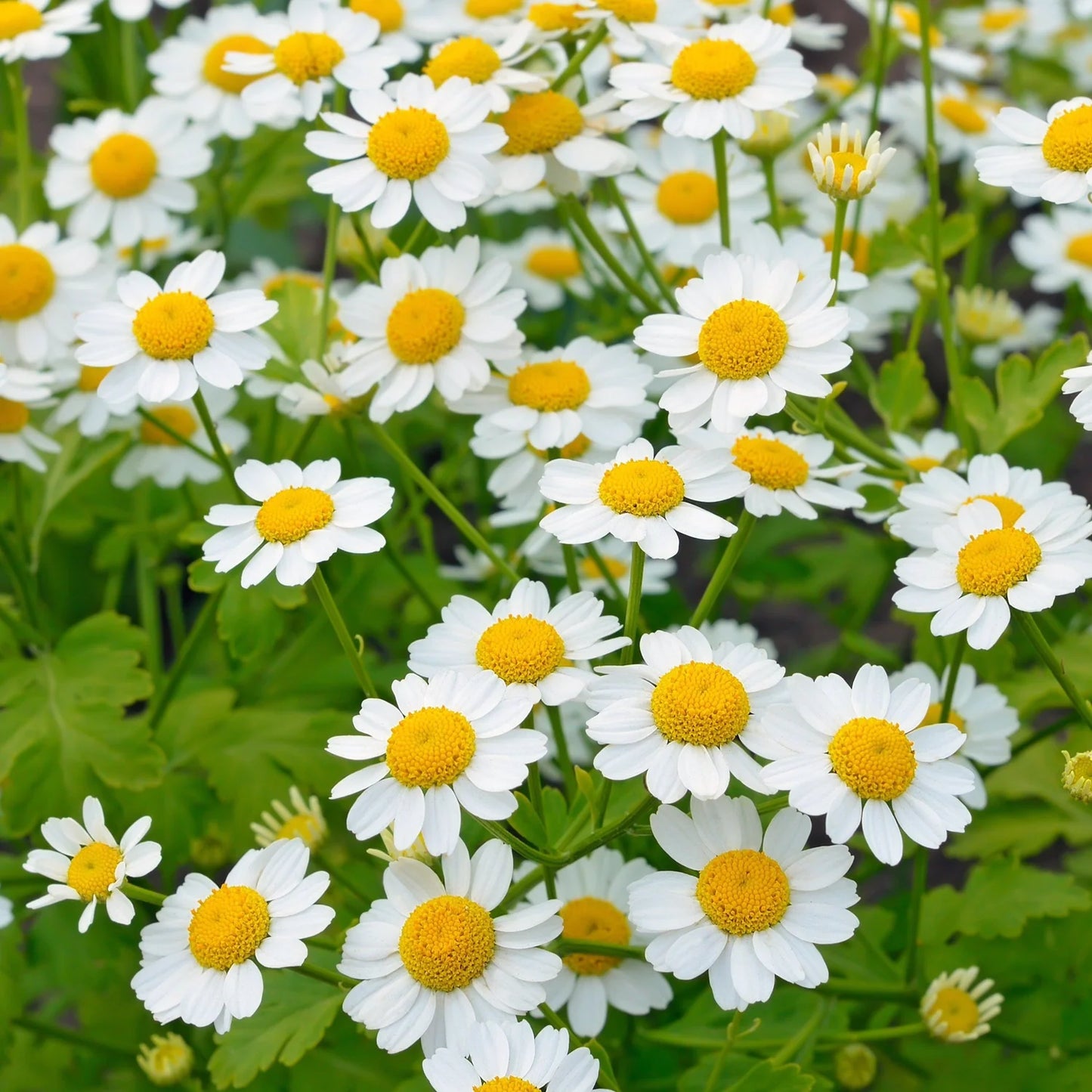
Add charm and delicate texture to your garden with Feverfew Tanacetum Parthenium seeds. Known for its small, daisy-like white flowers and finely divided foliage, this herbaceous plant is perfect for garden borders, cottage-style gardens, and pollinator-friendly landscapes.
Key Benefits:
- Delicate White Flowers: Tiny daisy-like blooms create a cheerful and soft appearance in garden beds or containers.
- Attractive Foliage: Feathery, aromatic leaves add texture and visual interest to herb and flower gardens.
- Pollinator-Friendly: Flowers attract bees, butterflies, and other beneficial insects, supporting a healthy garden ecosystem.
- Versatile Garden Use: Ideal for herb gardens, borders, wildflower mixes, or mixed perennial beds.
- Easy to Grow: Hardy and adaptable, making it suitable for both beginner and experienced gardeners.
Planting & Growth Information:
- Soil: Prefers well-drained, moderately fertile soil.
- Sunlight: Full sun to partial shade for best flowering and foliage development.
- Watering: Keep soil evenly moist during germination; once established, moderate watering is sufficient.
- Germination Time: Typically 10–14 days under ideal conditions.
- Mature Height & Spread: Grows 30–60 cm tall with a spread of 30–45 cm.
- Growth Type: Perennial herbaceous plant, often grown as an annual in cooler climates.
- Bloom Season: Summer, producing clusters of small white daisy-like flowers.
FAQ:
- How can these seeds enhance my garden?
- Feverfew adds delicate white blooms and feathery foliage, creating charming borders, herb gardens, or mixed perennial beds.
- Are these seeds suitable for beginner gardeners?
- Yes! Feverfew is hardy, adaptable, and easy to grow with basic sunlight, well-drained soil, and moderate watering.
- When will I see flowers?
- Germination takes about 10–14 days, with blooms typically appearing in summer once plants are established.
- Where should I plant them for best results?
- Plant in sunny to partially shaded areas with well-drained soil; suitable for borders, containers, and herb gardens.
- Will these flowers attract pollinators?
- Yes! Bees, butterflies, and other beneficial insects are naturally attracted to the small, daisy-like flowers.