

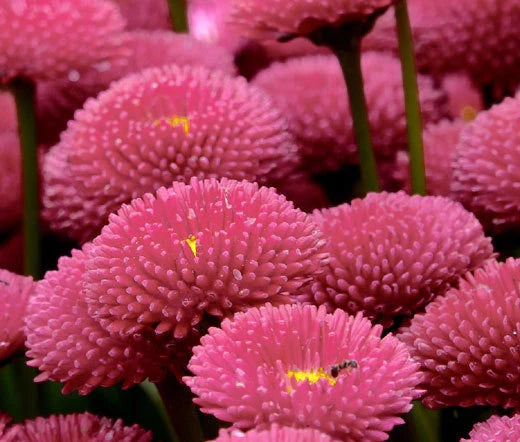
English Daisy Rose Bellis Perennis Super Enorma – Colorful Garden Flower Seeds
Brighten your garden with the charming blooms of English Daisy Rose Bellis Perennis Super Enorma seeds. This delightful variety produces large, fully double rose-colored flowers atop neat, low-growing foliage, adding a classic, cheerful appeal to borders, rock gardens, or container plantings.
Key Benefits:
- Large Double Rose Blooms: Showy flowers in soft pink tones create eye-catching displays in any garden setting.
- Compact Growth Habit: Ideal for borders, rock gardens, and container planting, adding texture and color at low height.
- Extended Blooming Period: Produces flowers over an extended season, enhancing your garden’s visual appeal.
- Pollinator-Friendly: Attracts bees and butterflies, supporting a thriving garden ecosystem.
- Beginner-Friendly: Easy-to-grow perennial, perfect for novice gardeners seeking quick and rewarding results.
Planting & Growth Information:
- Soil: Well-drained, fertile soil promotes healthy leaves and abundant flowers.
- Sunlight: Full sun to partial shade encourages compact growth and vibrant blooms.
- Watering: Keep soil evenly moist, avoiding waterlogging for best results.
- Germination Time: 10–14 days under optimal conditions.
- Mature Height & Spread: Reaches 10–20 cm in height with a spread of 15–25 cm.
- Growth Type: Hardy perennial with a clumping habit.
- Bloom Season: Spring to early summer, offering long-lasting color and charm.
FAQ:
- How will English Daisy Rose Super Enorma enhance my garden?
- The large, rose-colored blooms provide cheerful color and elegant texture, perfect for borders, rock gardens, or containers.
- Is this plant suitable for beginners?
- Yes, it is hardy, low-maintenance, and ideal for novice gardeners.
- When will the flowers bloom?
- Blooms appear from spring to early summer, lasting for several weeks.
- Where should I plant these seeds?
- Full sun to partial shade in well-drained soil ensures compact growth and abundant flowering.
- Does it attract pollinators?
- Yes, the flowers attract bees and butterflies, helping maintain a healthy garden ecosystem.