

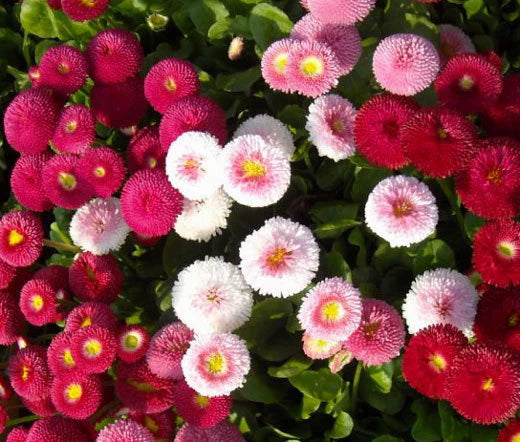
English Daisy Mixed Colors Bellis Perennis Super Enorma – Colorful Garden Flower Seeds
Bring charming, vibrant blooms to your garden with English Daisy Mixed Colors Bellis Perennis Super Enorma seeds. This hardy perennial produces large, double flowers in mixed shades of red, pink, and white, creating a whimsical and cheerful display in borders, containers, and cottage-style gardens.
Key Benefits:
- Mixed Color Blooms: Large double flowers in shades of red, pink, and white add playful color to garden beds and containers.
- Compact Growth: Low-growing, dense plants are perfect for borders, edging, and mass plantings.
- Hardy Perennial: Returns year after year, providing long-lasting charm and color.
- Pollinator-Friendly: Flowers attract bees and butterflies, supporting a healthy garden ecosystem.
- Beginner-Friendly: Easy to grow and maintain, ideal for novice gardeners seeking cheerful, low-maintenance plants.
Planting & Growth Information:
- Soil: Well-drained, fertile soil enriched with compost or organic matter.
- Sunlight: Full sun to partial shade for healthy growth and abundant blooms.
- Watering: Keep soil consistently moist, especially during germination and flowering periods.
- Germination Time: 10–14 days under optimal conditions.
- Mature Height & Spread: Grows 15–20 cm tall with a spread of 20–25 cm.
- Growth Type: Hardy perennial flowering plant.
- Bloom Season: Spring through early summer for long-lasting, colorful blooms.
FAQ:
- How will English Daisy Mixed Colors enhance my garden?
- The large, vibrant blooms in red, pink, and white provide cheerful color and charm to borders, containers, and cottage-style gardens.
- Is this plant suitable for beginners?
- Yes, it is easy to grow, low-maintenance, and ideal for novice gardeners seeking perennial color.
- When will the flowers appear?
- Seeds germinate in 1–2 weeks, with blooms appearing in spring and lasting into early summer.
- Where is the best planting location?
- Full sun to partial shade with well-drained soil ensures healthy plants and abundant flowers.
- Does it attract pollinators?
- Yes, bees and butterflies are naturally drawn to the colorful double blooms.