


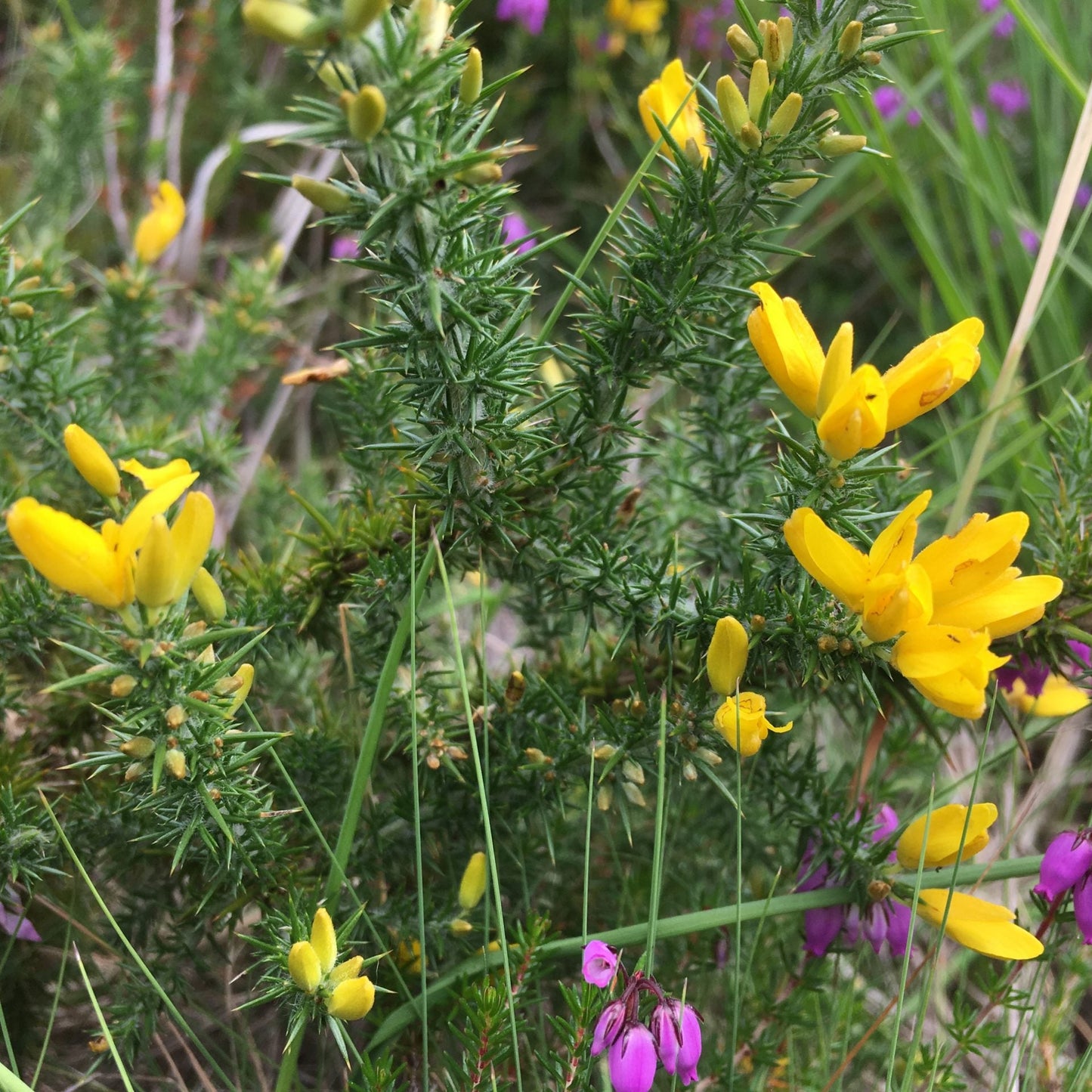
Dwarf Gorse (Ulex minor) is a compact, evergreen shrub known for its dense growth habit and bright yellow blooms. This hardy plant is well-suited for poor soils, coastal regions, and exposed sites. With its naturally low-growing form, it is ideal for rock gardens, borders, wildlife-friendly spaces, and low-maintenance landscapes. The shrub maintains year-round green foliage and develops vibrant flowers that attract pollinators.
These seeds grow into a durable, drought-tolerant shrub capable of thriving in sandy, acidic, or well-drained soils. The plant’s compact size makes it suitable for small gardens and managed landscapes where a hardy, evergreen presence is desired.
Key Features
-
Compact evergreen shrub
-
Botanical species: Ulex minor
-
Produces bright yellow blooms
-
Low-maintenance and hardy
-
Tolerates drought and poor soil conditions
-
Suitable for coastal and exposed environments
-
Attracts pollinators
-
Ideal for borders, rock gardens, and wildlife areas
Specifications
-
Botanical Name: Ulex minor
-
Common Name: Dwarf Gorse
-
Plant Type: Evergreen shrub
-
Growth Habit: Low and compact
-
Height at Maturity: 30–60 cm (varies with conditions)
-
Sunlight: Full sun
-
Soil Type: Well-drained, sandy, or acidic soils
-
Watering: Low to moderate
-
Climate Suitability: Mild to temperate regions
-
Growth Rate: Moderate
-
Hardiness: Strong resistance to wind and poor soil
Planting Guide
-
Seed Preparation
-
Lightly scarify seeds (nick the coat) to improve germination.
-
Soak seeds in warm water for 12–24 hours.
-
-
Sowing
-
Fill seed trays or pots with well-draining soil.
-
Sow seeds 5–8 mm deep and lightly cover.
-
Keep soil moist but not waterlogged.
-
-
Germination
-
Maintain temperature around 18–22°C.
-
Germination may take 3–6 weeks depending on conditions.
-
-
Transplanting
-
Transplant seedlings once they develop strong roots.
-
Plant in full sun with well-drained soil.
-
Space plants 30–50 cm apart depending on desired density.
-
-
Care
-
Water sparingly once established.
-
Prune lightly after flowering to maintain shape.
-
Avoid overly rich soils, as the plant prefers poor, sandy substrate.
-