


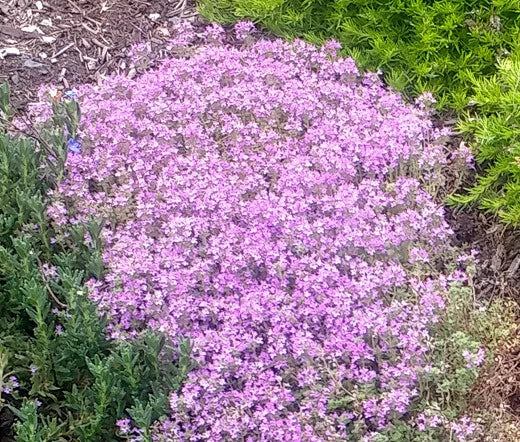
Dwarf Creeping Thyme Thymus Serpyllum – Groundcover Herb Seeds
Enhance your garden with fragrant, low-growing greenery using Dwarf Creeping Thyme Thymus Serpyllum – Groundcover Herb Seeds. This hardy, aromatic herb spreads to form dense mats, providing an attractive and resilient groundcover ideal for borders, rock gardens, and pathways.
Key Benefits:
- Fragrant foliage: Tiny aromatic leaves release a pleasant scent when touched, adding sensory delight to garden spaces.
- Low-growing groundcover: Forms dense mats that suppress weeds and create an elegant carpet effect.
- Perennial growth: Returns year after year, providing consistent garden coverage.
- Pollinator-friendly: Produces small blooms that attract bees and butterflies, supporting a healthy garden ecosystem.
- Versatile planting: Suitable for borders, rock gardens, pathways, or container edges.
Planting & Growth Information:
- Soil: Well-draining soil; tolerates sandy, loamy, or rocky soils enriched with compost.
- Sunlight: Full sun to partial shade; full sun promotes dense growth and vibrant foliage.
- Watering: Moderate; keep soil lightly moist during germination, then drought-tolerant once established.
- Germination: 14–21 days; maintain warmth and consistent moisture for best results.
- Growth Type: Perennial herbaceous groundcover.
- Mature Height & Spread: Typically 2–6 inches tall with spreading growth up to 12–18 inches wide, forming a dense mat.
- Bloom Season: Late spring to summer; small flowers add color and attract pollinators.
Frequently Asked Questions:
- How can these seeds enhance my garden? Dwarf Creeping Thyme forms a fragrant, dense groundcover that beautifies borders, rock gardens, and pathways while attracting pollinators.
- Are they suitable for beginner gardeners? Yes! Hardy and low-maintenance, they thrive with basic care and sunlight.
- Will they attract pollinators? Yes, the small blooms naturally draw bees and butterflies.
- Where should I plant them? Ideal for sunny borders, rock gardens, pathways, or containers with well-draining soil.
- How long until I see blooms? Expect tiny flowers to appear in late spring to summer, enhancing the aromatic groundcover effect.