


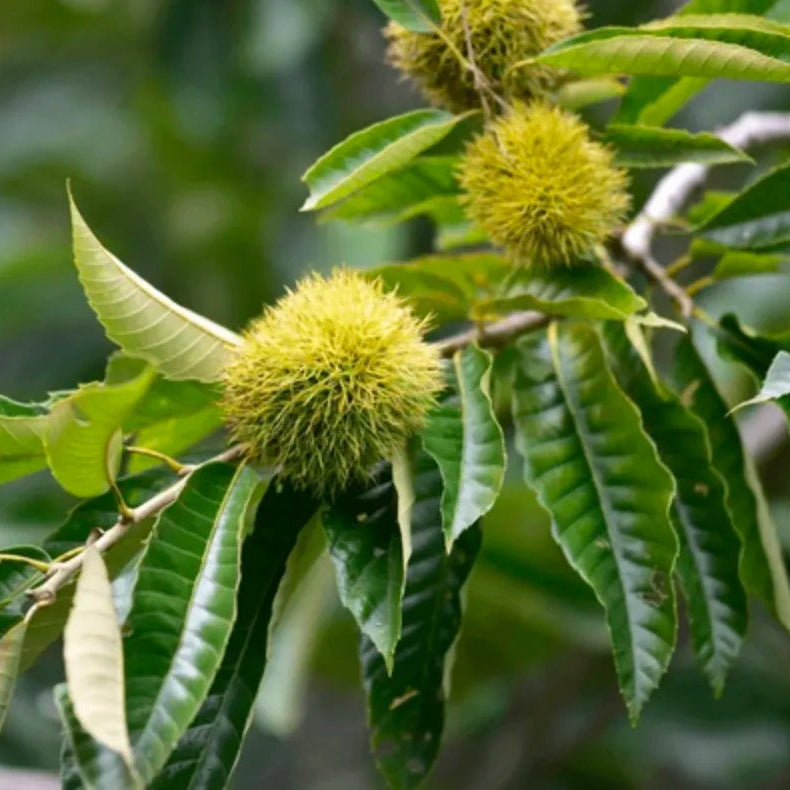
Grow your own chestnut trees using these high-quality heirloom, non-GMO seeds selected for consistent growth and reliable establishment. Chestnut trees are known for their strong structure, attractive foliage, and edible nut production. Suitable for a wide range of climates, these seeds offer gardeners the opportunity to cultivate long-lived trees that contribute to landscape diversity and seasonal harvests.
Each seed is carefully processed to support healthy germination when planted under suitable conditions. Chestnut trees are valued for their resilience, making them a thoughtful addition to home gardens, orchards, and larger landscape projects.
Features
-
Heirloom and Non-GMO: Naturally preserved seed variety with no genetic modification.
-
Long-Lived Tree Species: Well-known for growth longevity when cared for properly.
-
Edible Chestnuts: Produces seasonal nuts once mature.
-
Adaptable to Various Climates: Performs well in temperate regions.
-
Broad Canopy Development: Creates natural shade and enhances landscaping.
-
Hardy Growth Habit: Robust structure suitable for outdoor planting.
Specifications
-
Botanical Name: Castanea spp.
-
Seed Type: Heirloom, Non-GMO
-
Growth Habit: Deciduous tree
-
Lifespan: Perennial
-
Climate Suitability: Temperate zones
-
Light Requirements: Full sun
-
Soil Requirements: Well-drained, slightly acidic soil
-
Watering Needs: Moderate while establishing; low to moderate once mature
-
Maturity Timeline: Several years before nut production begins
-
Planting Season: Late winter to early spring
-
Germination Time: 2–4 weeks under controlled conditions
-
Spacing: 25–40 ft depending on long-term growth area
-
Growth Height: Can reach 40–70 ft when fully mature
Planting Guide
-
Cold Stratification:
Keep seeds refrigerated in a moist medium for 60–90 days before planting to support germination. -
Soil Preparation:
Use loose, well-draining soil enriched with organic matter. -
Planting Depth:
Sow seeds 1–2 inches deep in prepared soil. -
Watering:
Maintain consistent moisture during germination and early growth stages. -
Sunlight Exposure:
Ensure planting in a full-sun location for optimal development. -
Transplanting:
Shift seedlings to their permanent position once they are hardy and actively growing.