


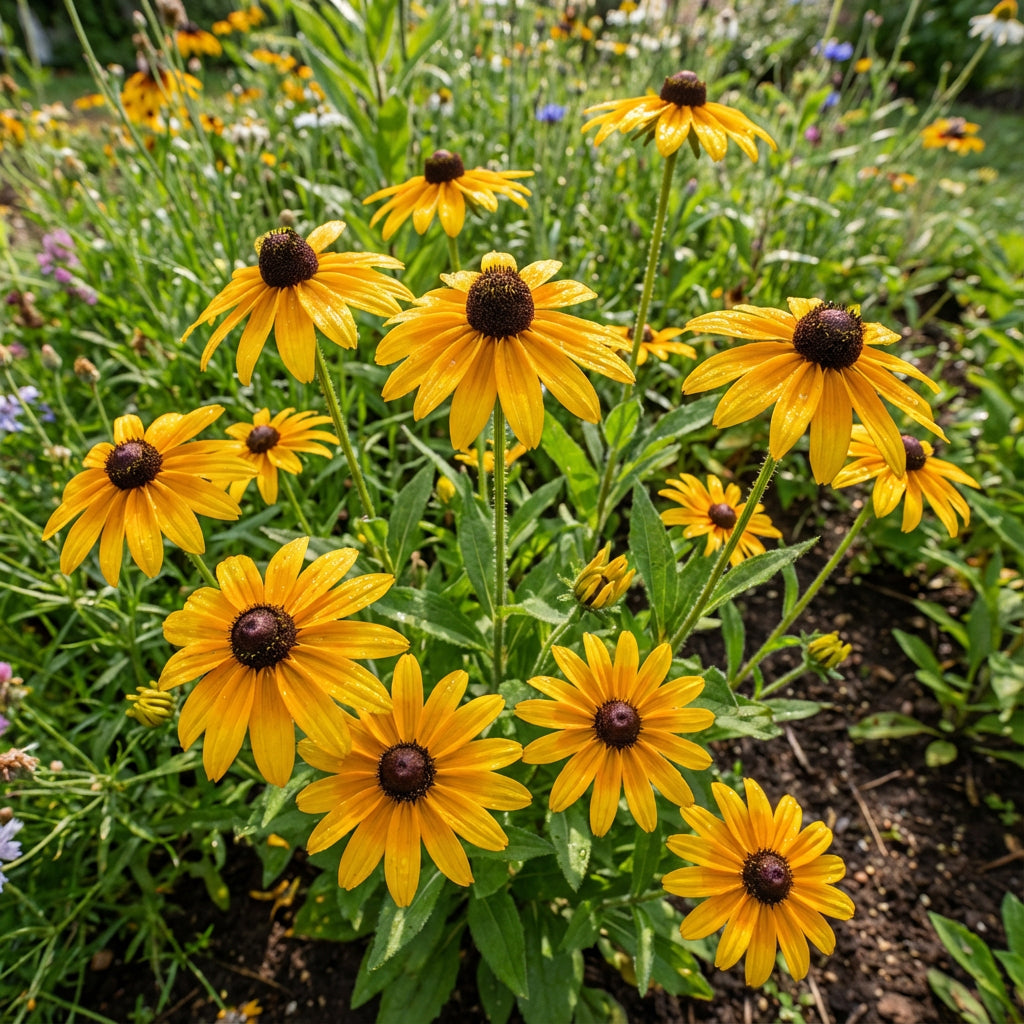
Black Eyed Susan Rudbeckia Hirta – Perennial Garden Flower Seeds
Brighten your garden with Black Eyed Susan Rudbeckia Hirta – Perennial Garden Flower Seeds. Known for its bold golden-yellow petals surrounding a dark center, this classic perennial adds vibrant color and structure to borders, flower beds, and naturalized areas. Hardy and long-lasting, Black Eyed Susans provide a cheerful display that attracts pollinators and enhances any garden design.
Key Benefits
- Vivid golden-yellow blooms: Creates eye-catching focal points in borders, beds, and meadows.
- Hardy perennial: Returns year after year, offering lasting beauty and garden structure.
- Pollinator-friendly: Naturally attracts bees, butterflies, and other beneficial insects.
- Low-maintenance: Tolerant of a variety of soils and weather conditions.
- Versatile placement: Perfect for cottage gardens, wildflower meadows, or mixed borders.
Planting & Growth Information
- Soil: Prefers well-draining soil; adapts to clay, sandy, or average garden soil.
- Sunlight: Full sun promotes abundant flowering and strong stems.
- Watering: Moderate watering during establishment; drought-tolerant once mature.
- Germination: Seeds typically sprout in 7–14 days under optimal conditions.
- Height & Spread: Grows 24–36 inches tall with a spread of 12–18 inches.
- Growth Type: Hardy perennial with upright stems and daisy-like flowers.
- Bloom Season: Summer to early autumn for a long-lasting floral display.
Frequently Asked Questions
- How can these seeds enhance my garden?
- The golden-yellow blooms create cheerful focal points and add vibrant structure to borders and flower beds.
- Are they suitable for beginner gardeners?
- Yes, Black Eyed Susans are hardy, easy to grow, and low-maintenance.
- Will they attract pollinators?
- Yes! Bees, butterflies, and other beneficial insects are naturally drawn to the flowers.
- What is the ideal planting location?
- Plant in full sun with well-draining soil for optimal growth and abundant flowering.
- How long until I see flowers?
- After germination in 1–2 weeks, blooms typically appear within 10–12 weeks depending on growing conditions.