


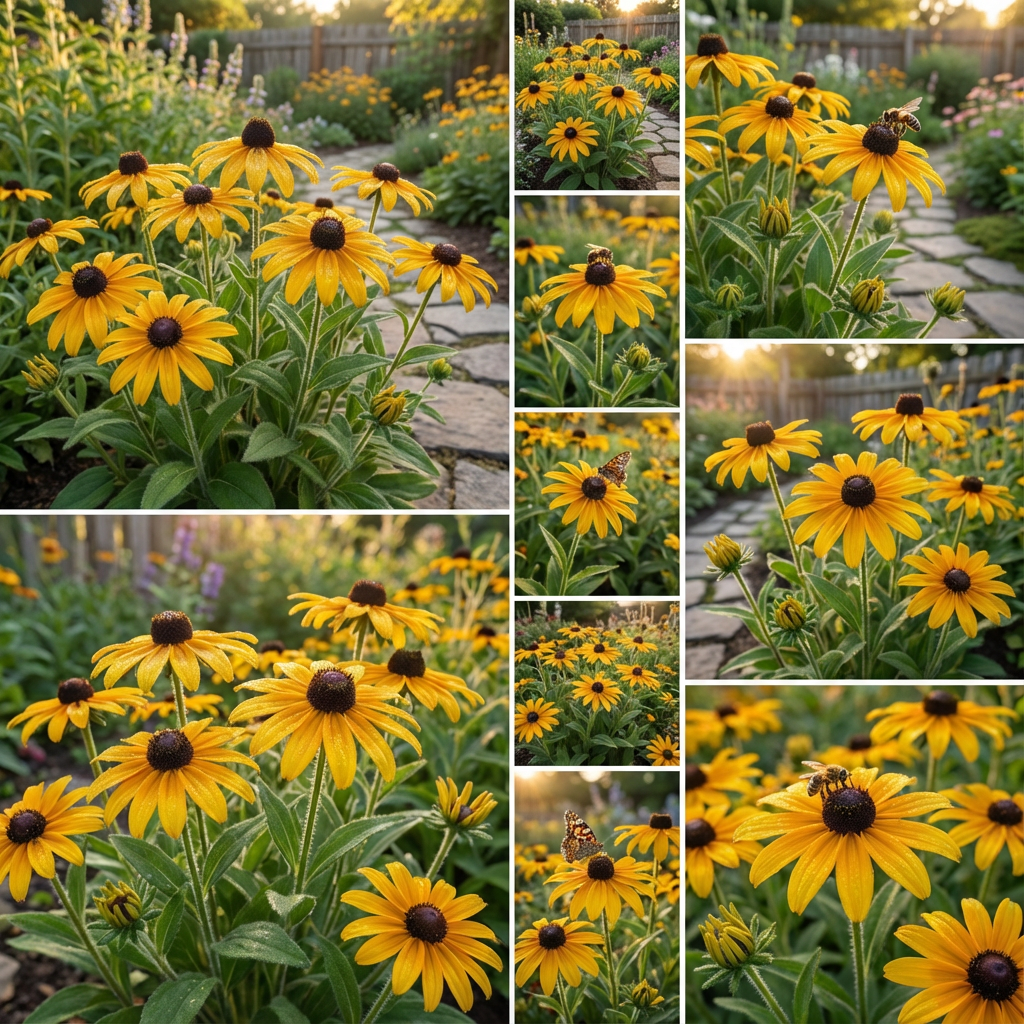
Black Eyed Susan Rudbeckia Hirta – Garden Flower Seeds
Add classic charm with Rudbeckia Hirta Black Eyed Susan seeds. These cheerful perennials produce golden-yellow daisy-like blooms with dark centers, ideal for borders, meadows, and pollinator gardens.
Key Benefits:
- Bright yellow flowers with dark centers create a striking garden display.
- Upright, bushy growth enhances borders and mixed beds.
- Attracts pollinators such as bees and butterflies.
- Perennial growth provides seasonal blooms for multiple years.
- Beginner-friendly and easy to cultivate.
Planting & Growth Information:
- Sunlight: Full sun.
- Soil: Well-draining, fertile soil.
- Watering: Moderate; maintain soil moisture during establishment.
- Germination: 7–14 days.
- Mature Height: 2–3 feet (60–90 cm).
- Bloom Season: Summer to early fall.
- Growth Type: Perennial.
FAQ:
- How will these seeds enhance my garden? They add cheerful yellow blooms with striking dark centers.
- Are they beginner-friendly? Yes, they grow easily in sunny areas with minimal care.
- Where should I plant them? Borders, meadows, or pollinator-friendly gardens.
- When will flowers appear? Expect blooms from summer through early fall.
- Do they attract pollinators? Yes, they attract bees and butterflies.