

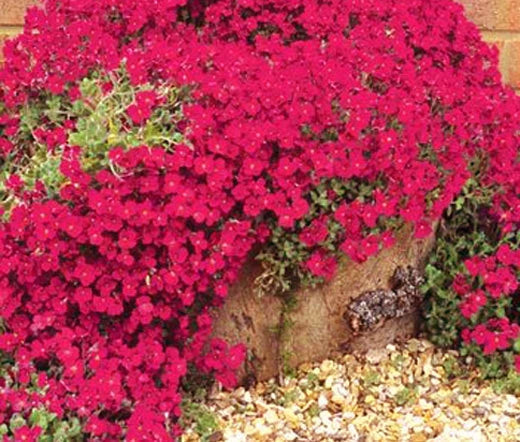
Aubrieta Rock Cress Cascade Red Aubrieta Hybrida – Hardy Garden Flower Seeds
Add vibrant color and cascading charm to your garden with Aubrieta Rock Cress Cascade Red Aubrieta Hybrida. These hardy garden flower seeds produce dense mats of lush foliage adorned with bright red flowers, perfect for rock gardens, borders, walls, and container plantings.
Key Benefits:
- Vibrant Red Blooms: Eye-catching red flowers create a striking display in any garden space.
- Cascading Growth Habit: Low-growing, spreading plants form dense mats that cascade beautifully over rocks, walls, or edges.
- Versatile Garden Use: Ideal for rock gardens, borders, terraces, walls, and container plantings.
- Pollinator-Friendly: Flowers attract bees and butterflies, enhancing garden biodiversity.
- Beginner-Friendly: Easy to sow and maintain, providing reliable blooms even for novice gardeners.
Planting & Growth Information:
- Soil: Prefers well-draining, fertile soil for optimal growth and flowering.
- Sunlight: Thrives in full sun to partial shade.
- Watering: Keep soil moderately moist during germination; established plants are drought-tolerant.
- Germination: Typically 14–21 days under optimal conditions.
- Mature Size: Reaches 10–15 cm (4–6 inches) in height with a spread of up to 60 cm (24 inches).
- Growth Type: Perennial, offering recurring blooms in temperate climates.
- Bloom Season: Early to mid-spring, producing vibrant red flowers over dense cascading foliage.
Frequently Asked Questions:
- How can these seeds enhance my garden? They provide vibrant red blooms and cascading growth, perfect for rock gardens, walls, and borders.
- Are Aubrieta Rock Cress seeds suitable for beginners? Yes, they are easy to sow, grow, and maintain, ideal for novice gardeners.
- Will they attract pollinators? Absolutely, the bright flowers naturally draw bees and butterflies.
- What is the ideal planting location? Plant in full sun or partial shade with well-draining soil for best results.
- How long until I see flowers? Expect bright red blooms approximately 8–10 weeks after sowing, depending on growing conditions.