


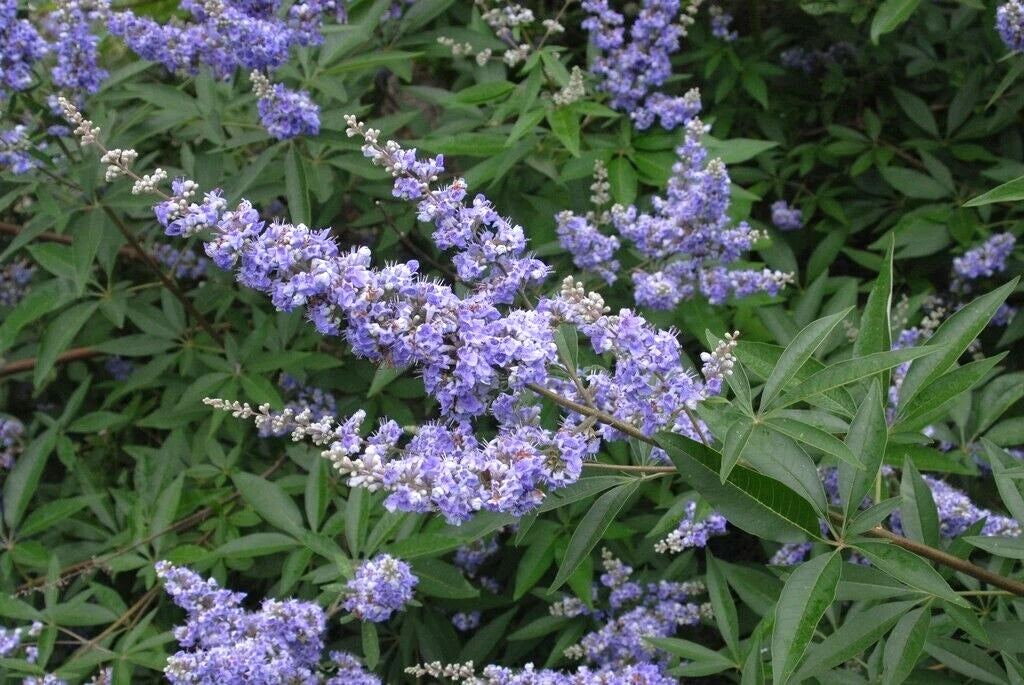
Abbeville Blue Chaste Tree Vitex Agnus-Castus – Flowering Tree Seeds
Bring Mediterranean charm to your garden with Abbeville Blue Chaste Tree Vitex Agnus-Castus – Flowering Tree Seeds. This ornamental tree produces tall spikes of fragrant blue-violet flowers atop elegant, aromatic foliage. Perfect for garden borders, patios, or landscape focal points, its long-lasting blooms and upright growth habit add color, structure, and sensory appeal to any outdoor space.
Key Benefits
- Produces fragrant blue-violet flower spikes that brighten garden beds and patios.
- Upright growth habit makes it ideal for borders, hedges, or standalone ornamental displays.
- Aromatic foliage adds sensory appeal to gardens and outdoor spaces.
- Easy-to-grow seeds suitable for gardeners of all skill levels.
- Attracts pollinators like bees and butterflies, enhancing your garden ecosystem.
Planting & Growth Information
- Soil: Prefers well-drained, fertile soil; tolerates sandy or loamy types.
- Sunlight: Full sun for optimal flowering and growth.
- Watering: Moderate watering; allow soil to dry slightly between waterings.
- Growth Habit: Deciduous to semi-evergreen flowering tree with upright, vase-shaped form.
- Height & Spread: Typically grows 8–15 feet tall with a spread of 6–10 feet.
- Germination: Seeds sprout in 2–4 weeks under warm, moist conditions.
- Bloom Season: Summer through early autumn, providing long-lasting color.
Frequently Asked Questions
How can this tree enhance my garden?
Its fragrant blue-violet flower spikes and upright form create a visually striking and aromatic focal point.
Are these seeds suitable for beginners?
Yes, they are easy to sow and maintain, perfect for gardeners seeking a low-maintenance flowering tree.
Where should I plant them?
Full sun with well-drained soil is ideal, either in borders, hedges, or as standalone ornamental trees.
How long until I see flowers?
Expect blooms starting in summer and continuing into early autumn for a long-lasting floral display.
Will it attract pollinators?
Yes, bees, butterflies, and other beneficial insects are drawn to the fragrant flowers.